
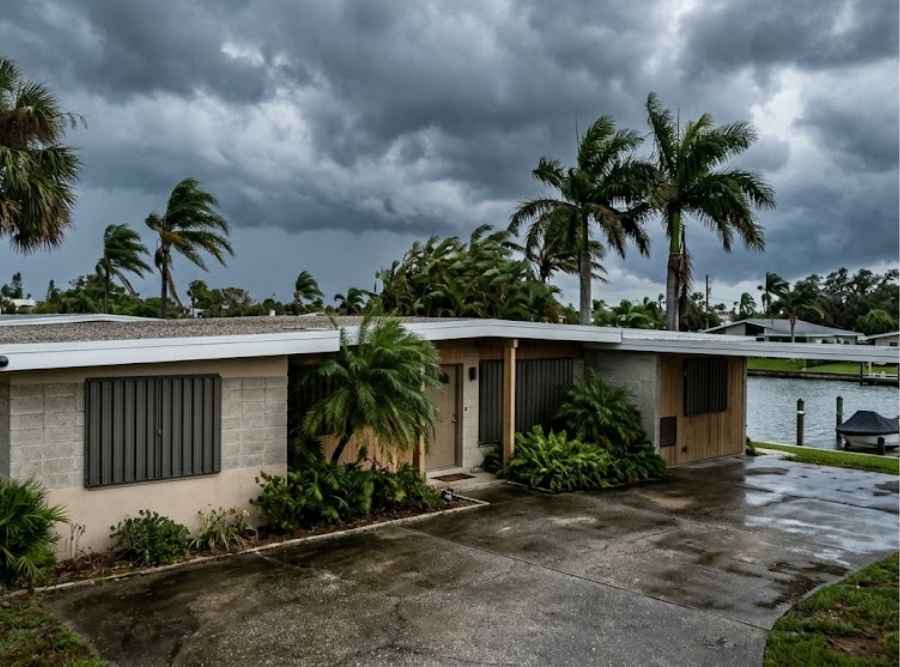
Can Smart Home Technology Help St. Petersburg Homeowners Prepare for Storm Surge Evacuations?
Yes, smart home technology can help St. Petersburg homeowners prepare for storm surge evacuations by closing shutters, confirming locks, and sending water, power and camera updates after they leave. It only works through a storm if the system runs locally, has long-lasting battery backup and a cellular connection that survives an internet outage. It never replaces following an evacuation order.
When a named storm turns toward Pinellas County, the hours before evacuation get crowded fast. Homeowners in Shore Acres and Snug Harbor are moving cars to higher ground, checking shutters and trying to get over the Howard Frankland Bridge before traffic locks up. A smart home can take some of that work off their hands. It can close motorized shutters, confirm every door is latched, and keep reporting on the house once the family is on I-75 heading north. The problem is that most systems were never designed to keep working through the conditions a storm creates.
The 2024 hurricane season showed St. Petersburg homeowners what storm surge can do to low-lying neighborhoods. It also showed how quickly consumer smart devices go dark when power, internet and cell service fail at the same time. The difference between a system that helps and one that goes silent comes down to how it was engineered: where it processes its automations, how it stays powered, and how it reaches you once you’ve left.
What Smart Home Technology Can and Can’t Do in a Storm Surge Evacuation
A well-designed system gives an evacuating homeowner three things: preparation, verification and awareness. Preparation means closing motorized storm shutters, securing smart locks, and setting climate controls for an empty house with one command before leaving. Verification means confirming, from the road, that every shutter fully closed and every lock actually latched, rather than assuming. Awareness means continuing to receive water sensor alerts, power status and camera snapshots after the family has evacuated.
What smart home technology can’t do is protect a house from surge water itself. Sensors report flooding but don’t stop it, and cameras show rising water but can’t keep it out. No app or automation is a reason to delay an evacuation, and no device should convince a family to stay behind in a surge zone. The value of the system is information and control while you are safely somewhere else.
This distinction matters because the stakes are real. A homeowner who knows the house is sealed, dry and still reporting in can make better decisions about insurance calls, contractor scheduling and when to return. A homeowner watching a blank app screen from 200 miles away has none of that information. The goal of a storm-ready system is to close that gap.
The Misconception: Your Smart Home Apps Will Keep Working After You Leave
Most homeowners assume that if their app works on a normal day, it will work during a storm. In practice, the typical smart home fails in stages. The first failure is the internet connection. When local providers lose service, any automation that depends on cloud processing stops, including routines built in Alexa or Google Home. The device in the house may still have power, but it can no longer receive instructions or send updates.
The second failure is power. Many homes rely on inexpensive battery backup units designed for office computers, and those often run for 15 minutes to an hour before shutting down. Heat shortens that further, since Florida garages and closets dry out and degrade standard backup batteries over time. By the time the surge peaks, often hours after the power goes out, the system is already dark.
The third failure is the cellular network itself. During a hurricane, regional towers fill up with emergency traffic, and some lose power or their connection back to the network. Video streaming is the first thing to fail under those conditions because it needs far more bandwidth than a simple status message. That is why homeowners so often report that cameras froze halfway through the evacuation drive. A storm-ready system is built for this sequence: automations that run locally, backup power measured in days, and alerts light enough to get through a congested network.
Building a System That Stays Online When the Grid Goes Down
The foundation of a storm-ready smart home is local processing. A local automation hub or controller runs routines inside the house without waiting on a cloud server, so shutters close, locks secure and sensors trigger even when the internet is gone. This is sometimes called high-availability or cloud-independent automation. Cloud-connected apps and voice assistants remain useful on normal days, but the critical storm functions should never depend on them.
Power comes next. Low-voltage equipment such as the hub, network switches, cellular router and sensor bridges draws very little power, so it can be kept alive for long periods with the right battery. Lithium iron phosphate batteries, often labeled LiFePO4, handle Florida heat better than standard office backup units. They can keep essential gear running through extended outages. Pinellas County outages can last five to ten days after a major storm, so battery capacity should be planned for days, not minutes.
The final layer is connectivity. A commercial-grade cellular router with dual SIM cards and an external antenna gives the system a path out of the house when cable or fiber internet fails. Pairing that router with low-bandwidth alerts, such as water sensor triggers, power status and occasional still images, makes it far more likely that updates get through a congested network. Live video is a bonus when the network allows it, not the primary way the system reports.
Water Sensors, Shutters and Locks: Where Storm Setups Fail
Water sensor placement is one of the most common mistakes we see. A sensor laid flat on a garage floor makes sense for a washing machine leak, but storm surge is saltwater, and saltwater is highly conductive. A single ground-level sensor can short out on first contact and never send its alert. A better approach stacks sensors at several heights, with transmitters mounted above expected water levels. Each alert then tells the homeowner how high the water has risen, and the system can keep reporting as the water climbs.
Motorized storm shutters have their own weak point. As grid voltage sags during pre-storm rain, shutter motors can slow down or stall partway through their travel. A shutter that stops halfway leaves windows exposed to wind-driven rain and flying debris. That is why shutters should be closed well before the storm arrives. Their position should be confirmed through the system, not by sight alone, and every motorized shutter should have a manual override the homeowner knows how to use.
Smart locks need the same planning. Battery-powered locks and window sensors can drop offline before a storm arrives, and a lock with shorted internal wiring can keep a returning family out of their own home. Every exterior smart lock on a storm-exposed home should have a mechanical key override, and fresh batteries should be installed as part of storm prep. Families should also understand how their locks behave during a power failure, so the house stays secure without ever trapping anyone inside during an emergency.
Power, Saltwater and Electrical Safety
The most dangerous moment in a storm surge is when saltwater reaches live electrical outlets, panels and equipment. If the home’s power is still on when water rises into a garage or lower level, the result can be electrical fires, corrosion that destroys wiring throughout the house, and serious shock hazards for anyone who enters. This risk is why electrical safety belongs in any storm technology plan, not just sensors and shutters.
Smart electrical panels and smart breakers can give homeowners more control, including the ability to shed nonessential loads or shut down vulnerable circuits. Any setup that disconnects circuits or the main service should be designed and installed with a licensed electrician. It should also follow Duke Energy Florida’s guidance for the service at that address. Remote shutoff is a tool that supports safe practices, not a substitute for them. Homeowners should still follow official guidance about turning off power before evacuating when surge is expected.
Returning home carries its own rules. If water entered the house, don’t restore power or reset breakers until a licensed electrician has inspected the electrical system. Smart home equipment exposed to saltwater should be treated as damaged even if it appears to work, because corrosion continues after the water recedes. A proper storm system helps here too. Sensor history shows how high the water reached and when, which is useful information for electricians, insurers and restoration crews.
Why St. Petersburg Homes Face Unique Storm Surge Challenges
St. Petersburg sits on a narrow peninsula with saltwater on three sides, which puts almost the entire city within a few miles of open water. Neighborhoods like Shore Acres, Snug Harbor, Riviera Bay, Venetian Isles and Coquina Key were built in the 1950s through the 1970s, many of them on dredged finger canals or filled wetlands. Their low elevation makes them some of the most surge-exposed neighborhoods in Tampa Bay. Salt fog in those areas corrodes exterior sensors and contacts long before a storm arrives, which is why storm equipment needs routine checks, not a one-time install.
Evacuation itself is shaped by geography. Leaving Pinellas County means crossing a limited number of bridges and routes, including the Howard Frankland Bridge and I-275. Many families leave early to avoid bottlenecks. That makes remote verification more valuable, because the house has to prepare itself hours before the storm and report on its own for days afterward.
Housing type matters too. Newer coastal homes in flood zones are often elevated on stem walls with garages below the living space. That makes the garage the likely first point of water entry and the most important place for layered sensors. Seasonal residents add another challenge. Snowbirds who leave St. Petersburg in late spring need systems that respond to a storm with no one on site at all. Short-term rental owners need a way to confirm that guests actually secured the property before evacuating.
Planning Early or Rebuilding After
| Timing | What the work usually involves | Relative cost |
|---|---|---|
| Proactive storm hardening | Local hub, cellular failover, long-duration battery backup and layered water sensing | Predictable install cost |
| After a surge | Replacing electrical panels, smart switches, shutter motors and central controllers | Major reconstruction cost |
| Worst case | Total loss of interior electronics from fires caused by surge water reaching live circuits | Highest |
Hurricane season planning is best done in the off-season, when there’s time to design, install and test the system under normal conditions. A storm system that has never been tested is a guess. One that has been run through a practice evacuation is a plan.
The Paradise Systems Difference
Most smart homes that fail during storms were built for convenience on sunny days, not resilience during the worst week of the year. Paradise Systems approaches storm preparation as an engineering problem. That means asking what each part of the system will do when power, internet and cell service fail, and designing for that moment first. The result is a home that can prepare itself, report on itself, and help its owners make decisions from a safe distance.
In practice, that means building critical automations around local processing, and sizing battery backup for days of outage. It also means pairing cellular failover with alerts that can get through congested networks. We place water sensors where surge will actually reach them, integrate motorized shutters with verified position reporting, and make sure every storm-critical lock and shutter has a manual override. When a plan involves electrical shutoff, we coordinate with licensed electricians so the power side of the system is designed safely.
We also help homeowners run through the plan before they need it, including a practice run of the evacuation routine. A system that works on paper but has never been tested is the one most likely to fail when it matters. We work with homeowners across St. Petersburg, Tampa, Clearwater and the rest of Tampa Bay, including seasonal residents who need their homes to handle a storm without them.
Frequently Asked Questions About Smart Homes and Storm Surge Evacuations
Will my Ring camera work during a hurricane?
It will only work as long as it has power, an internet connection and a clear path through the cellular network. Most consumer cameras rely on home Wi-Fi and cable internet, so they usually go offline when the power or provider fails. Even with backup power, video streams often freeze when towers are congested with emergency traffic. A system with local processing, battery backup and cellular failover is far more likely to keep sending at least basic alerts and still images.
How can I check if my house is flooded after I evacuate?
The most reliable method is a set of water sensors mounted at several heights and connected to a system with battery backup and a cellular connection. Stacked sensors tell you how high the water rose, not just whether it arrived. A single sensor on the floor may fail on first contact with saltwater before it can send an alert. Pairing sensors with low-bandwidth notifications gives you the best chance of getting updates while the storm is still passing.
How do I close smart shutters if the power goes out?
Every motorized storm shutter should have a manual override, and homeowners should know how to use it before hurricane season begins. The better plan is to close shutters well before the storm, while grid power is still stable, since voltage drops can cause motors to stall partway. Battery-backed shutter systems add another layer of protection. Always confirm shutter position through the system or in person before you leave.
Do smart locks work when the power and internet go out?
Most battery-powered smart locks keep working locally during a power outage, but you may lose the ability to control or check them remotely once the internet fails. Batteries can also drain faster in storm conditions, so fresh batteries should be part of your storm prep. Every exterior smart lock should have a mechanical key override. That way, a dead battery or damaged electronics never keeps you out of your home when you return.
Should my smart home shut off my power automatically during a storm surge?
Automatic or remote power shutoff can reduce the risk of electrical fires and corrosion when surge water enters a home. It should only be designed and installed with a licensed electrician, following your utility’s guidance. It should support, not replace, official instructions about turning off power before evacuating. After any flooding, have an electrician inspect the system before power is restored.
Preparing Your Home Before the Next Storm Season
If you live in one of St. Petersburg’s surge-exposed neighborhoods, the best time to plan your home’s storm response is before a storm is on the radar. A system review can show you which parts of your current setup would fail during an outage, what it would take to keep critical functions running, and how to verify your home from wherever you evacuate. Paradise Systems is available to help homeowners across St. Petersburg and Tampa Bay build storm plans that work when it matters.